

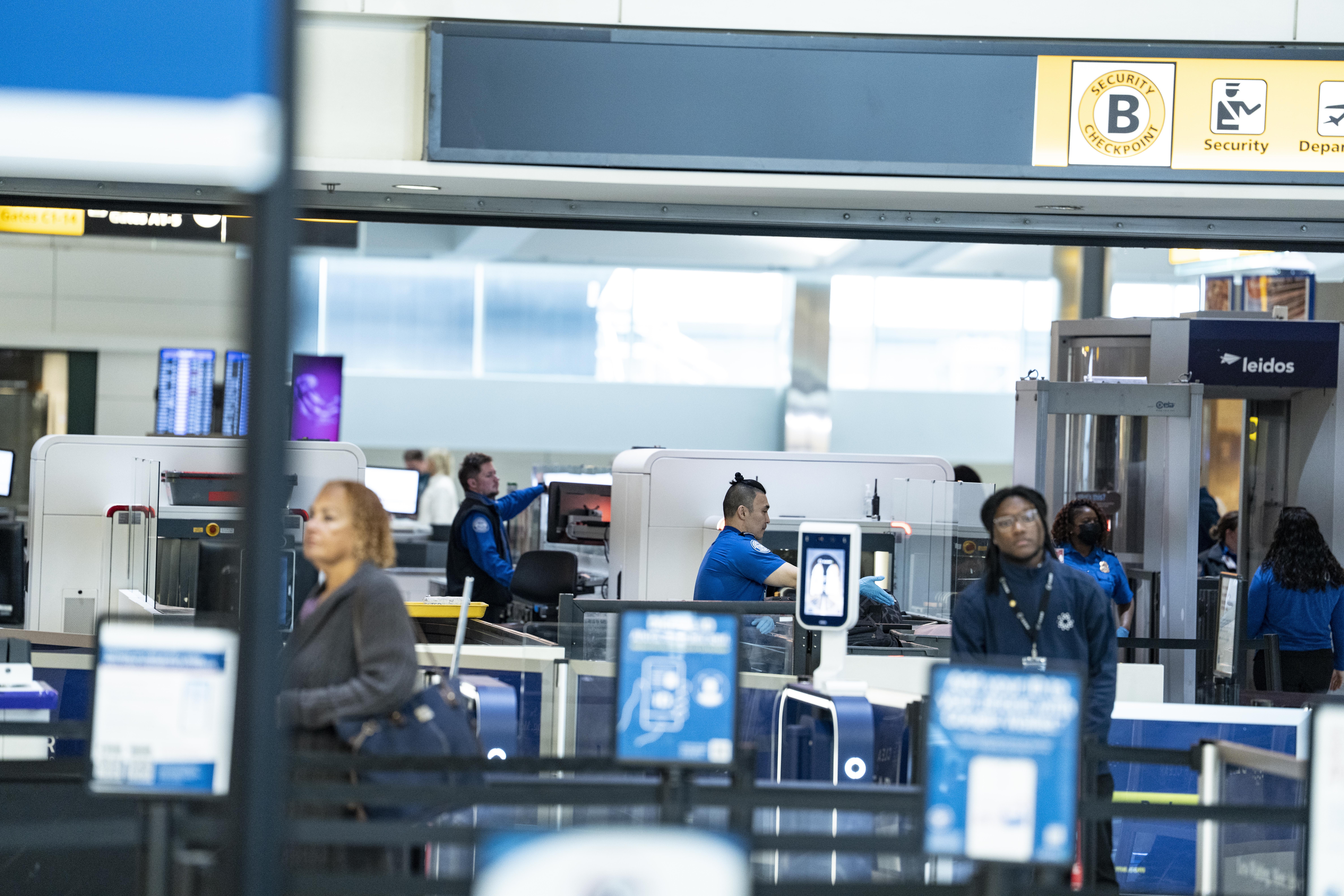
No, TSA cannot arrest you. TSA officers are federal security screeners, not law enforcement, and their job is to find weapons and explosives, not drugs. If they do find marijuana in your bag at Denver International Airport, they will call local police, and what happens next depends on a chain of events that most travelers do not fully understand before they make a decision that follows them home.
Tisdell Law Firm has been handling marijuana charges, including cases that started with a legal purchase in Colorado, since 2009. Call us today at 806-352-4844 if you or a family member is facing charges after traveling.
Most travelers assume that because Colorado legalized marijuana, airport security will either ignore it or send them to an amnesty box and let them go. The reality is more complicated, and the part that matters most happens after the TSA encounter, not during it.
The Transportation Security Administration’s stated mission is aviation security. Their screeners are looking for weapons, explosives, and items that could endanger an aircraft. They are not conducting drug investigations. TSA’s own policy acknowledges that officers do not search specifically for marijuana, and a screener who encounters marijuana during a security scan is not going to call the DEA or the FBI.
What they will do is refer the matter to local law enforcement. That referral is mandatory when marijuana is found, and it removes the matter from TSA’s hands entirely.
Once TSA refers a marijuana find to Denver Police Department officers who patrol DIA, what happens next is up to local law enforcement. Denver Police operate under Colorado law, and under Colorado law, possessing a small amount of marijuana by an adult 21 or older is legal. If the amount found is within legal limits and there are no other issues, Denver Police may choose not to take any action at all.
However, if the amount exceeds legal limits, if there is evidence of intent to distribute, or if the circumstances raise other concerns, an arrest under Colorado law is possible. Under some circumstances, even if Denver Police let you go, the story may not be over.
Colorado’s statewide legalization does not automatically apply everywhere within Colorado. Denver International Airport has its own rules, and they diverge from what is legal on the street in Denver.
Denver International Airport is a federally regulated facility. Federal law classifies marijuana as a Schedule I controlled substance regardless of state law. Because of DIA’s federal status, marijuana is prohibited on airport property, period. This applies to the parking lots, the terminals, the gates, and the aircraft. Bringing marijuana onto DIA property violates airport regulations even if you possess an amount that is perfectly legal under Colorado state law everywhere else in the city.
In practice, if you are caught with a small, legally permissible amount at DIA, Denver Police may simply tell you to dispose of it, place it in one of the airport’s green amnesty boxes, or return it to your vehicle.
This is the outcome travelers hope for, and it does happen, but it is not guaranteed. This optimal outcome depends entirely on the officer’s discretion, and it only addresses what happens in Colorado. The far larger problem for most travelers is not what happens at DIA, but rather what happens when they get home.
Before discussing why the risk extends beyond the airport, it helps to understand what Colorado law actually allows and where its boundaries end.
Colorado allows adults 21 and older to possess up to one ounce of marijuana, purchase marijuana from licensed dispensaries, and consume it in private spaces. Edibles, flower, concentrates, and vaporizer cartridges are all available legally. Tourists can purchase and possess marijuana during their visit just as Colorado residents can. The problem is not the purchase. The problem is the departure.
Colorado’s legal status for marijuana extends exactly to Colorado’s borders and nowhere else. The moment marijuana crosses a state line, it becomes a federal crime regardless of what either state’s law says about it. This is not a technicality or an unenforced rule. Federal law prohibits the interstate transportation of controlled substances, and marijuana remains a Schedule I controlled substance under federal law regardless of how many states have legalized it.
The DIA encounter is the part travelers worry about. The trip home is the part they should worry about more.
Aircraft in interstate commerce operate under federal jurisdiction. From the moment you board a flight that crosses state lines, you are in federal airspace subject to federal law. Possessing marijuana on that aircraft is not a Colorado issue or a destination state issue. It is a federal marijuana defense issue, and federal marijuana charges carry consequences that state charges often do not.
Federal possession charges, distribution charges if the quantity or packaging suggests it, and related offenses all carry potential federal penalties including mandatory minimums in certain circumstances. Federal prosecution is less common for small personal-use quantities, but it is not impossible, and the risk increases significantly when the circumstances suggest something beyond simple personal use.
For travelers returning to Texas, the stakes are particularly serious and particularly misunderstood. Texas has not legalized marijuana, and Texas law treats THC concentrates very differently from how it treats flower.
A dab pen or vaporizer cartridge containing THC oil is classified as a Penalty Group 2 controlled substance under Texas law. Possession of a Penalty Group 2 substance is a felony in Texas, even in very small amounts. That legally purchased vape cartridge from a Denver dispensary becomes an automatic state jail felony or higher the moment it crosses into Texas. Possession of THC oil charges in Texas are prosecuted aggressively, and the legal origin of the product in Colorado provides no defense whatsoever.
THC edibles present the same problem. Gummies, chocolates, and infused beverages purchased legally in Colorado are controlled substances in Texas. Depending on the weight and the classification of the specific product, edibles charges can range from misdemeanor to felony. The labeling from a Colorado dispensary does not help you in a Texas courtroom.
Marijuana possession charges in Texas for flower are generally classified by weight and range from Class B misdemeanor for small amounts to felony charges for larger quantities. Even small amounts can produce lasting consequences including criminal records that affect employment, housing, and professional licensing.
Law enforcement encounters happen at multiple points along the route home. Texas law enforcement along the I-40 corridor, which connects New Mexico and Texas and serves as a primary return route from Colorado for Texas travelers, conducts regular interdiction operations specifically targeting drug transportation from Colorado. Amarillo and other Panhandle airports have seen passengers encounter law enforcement on the Texas end of a flight that originated in Denver.
Traffic stops on I-40 and I-25 for minor infractions frequently result in searches when officers detect the odor of marijuana or identify other indicators. A vacation purchase in a Denver dispensary, legally made and legally transported within Colorado, can become a felony arrest by the time the traveler reaches the Texas Panhandle.
Whether you are at DIA or at your home airport, knowing your rights before law enforcement engages you is important. You have the right to remain silent. Beyond providing identifying information when lawfully required, you are not obligated to answer questions about where you have been, what you purchased, or what is in your bag. Invoking your right to remain silent politely and clearly is not an admission of guilt and does not make your situation worse.
You have the right to an attorney. If you are being detained or arrested, state clearly that you want an attorney before answering any questions. Do not consent to searches unless you are legally required to do so, and state your non-consent clearly even if the officer proceeds anyway.
Statements made to law enforcement during an encounter become evidence in any subsequent prosecution. The desire to explain yourself, minimize the situation, or cooperate in hopes of a better outcome frequently makes things worse, not better. An attorney can communicate on your behalf without creating damaging admissions.
Tisdell Law Firm has handled marijuana cases involving people who legally purchased cannabis in Colorado and faced serious charges when they returned home to Texas. These are not unusual cases for our firm. We understand exactly how Texas law treats THC concentrates, edibles, and flower, we know how interdiction cases are built by law enforcement, and we know how to challenge them.
Our defense in these cases focuses on the specifics of how the stop or search occurred, whether constitutional rights were observed throughout the encounter, whether the evidence was properly handled and tested, and whether the charging decision accurately reflects what the law requires for the specific substance involved. Many of these cases have significant procedural and constitutional issues that an experienced attorney can identify and pursue.
We represent clients throughout the Texas Panhandle and beyond in state and federal marijuana defense cases, and we approach each one with the same directness we bring to every client conversation.
If you or a family member has been charged with a marijuana offense after traveling from Colorado, contact Tisdell Law Firm at 806-352-4844 today. The earlier you involve an attorney, the more options are available to challenge the charges, protect your rights, and pursue the best possible outcome.
No. TSA screeners are looking for security threats, not drugs. They do not conduct drug searches, but they are required to refer marijuana to local law enforcement if they encounter it during a security screening.
Flying within Colorado, meaning on an intrastate flight that does not cross state lines, involves aircraft that may still fall under federal jurisdiction and DIA’s prohibition on marijuana on airport property. The safest approach is to consume marijuana in Colorado and not attempt to transport it through any airport.
TSA will refer the matter to Denver Police. Denver Police may take no action if the amount is within Colorado’s legal limits, or they may issue a citation or make an arrest depending on the circumstances. If you board a flight with marijuana and are not intercepted in Colorado, the more serious risk is what happens when you land in a state that has not legalized marijuana.
Politely decline to answer questions beyond providing required identifying information, and clearly state that you want an attorney before answering any questions. Do not consent to searches. What you say during a law enforcement encounter can become evidence in a prosecution, and an attorney can help you navigate the situation without creating damaging admissions.