Criminal Defense Result
Full Recovery
Seizure: $40,000 & 2012 Chevrolet Traverse
Seizure: $40,000 & 2012 Chevrolet Traverse


Waiting for action...
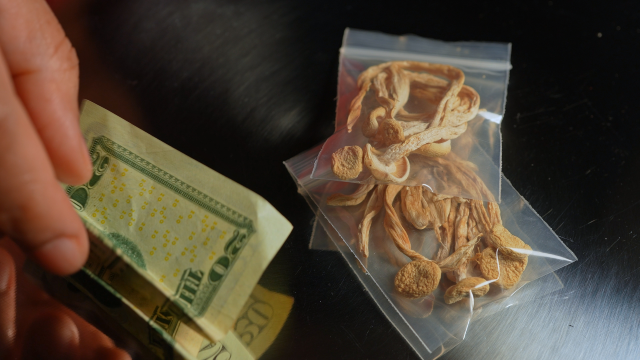
Texas has some of the toughest psilocybin laws in the country, and prosecutors here treat mushroom cases far more aggressively than people expect. Here’s the problem: a lot of folks assume that because attitudes are shifting in other states, the legal risk has softened. It hasn’t.
In Texas, you can still face serious felony allegations for distribution, sales, possession with intent, driving under the influence, conduct on federal land, or other circumstances that prosecutors believe violate state or federal law.
If you are dealing with a psilocybin felony charge in Texas, you may be feeling confused about what is legal, what isn’t, and what the next steps are. That’s where we can assist you. At Tisdell Law Firm, we help Texans understand their charges, protect their rights, and develop a defense strategy tailored to the specific details of each case. Don’t wait for the prosecution to get ahead of you.
If you’re anywhere in Texas, call (806) 352-4844 now to speak with a psilocybin felony lawyer who knows how to fight and win these cases in Texas courts.
In most cases, yes. Unlike some states that have rolled back penalties, Texas classifies psilocybin as a felony-level controlled substance. The exact charge depends on the facts:
That’s the key takeaway: the details drive the charge. Where the mushrooms were found, the quantity, the presence of cash or scales, and any alleged statements can all push a case toward a more serious felony. Our Amarillo federal drug crimes lawyer can review your specific charge and tell you whether you’re facing a state felony, a federal issue, or something that can be challenged.
It can—a lot.
Texas penalty ranges often scale with the weight of the substance. A small amount may be charged differently than a larger quantity, especially if the mushrooms were packaged separately or found alongside cash, scales, or messages prosecutors claim point to distribution.
The government often misses an important point: having a lot of something doesn’t prove intent. Our Amarillo criminal defense lawyer can question whether prosecutors can truly show the substance, weight, ownership, knowledge, and intent beyond a reasonable doubt.
After an arrest, you’ll likely be booked, given bond conditions, and ordered to appear in court. Police may seize substances, phones, cash, vehicles, or other property, and prosecutors often wait on lab testing before finalizing charges.
Here’s the most important move you can make: stay quiet. Don’t discuss the case with police or investigators without an Amarillo defense lawyer. Don’t text others about it. Don’t post online.
Don’t try to “explain” things to witnesses. Statements made after an arrest tend to create new problems rather than solve old ones.
Your criminal defense lawyer can request discovery, scrutinize how police behaved, examine the lab evidence, and decide whether your case should be challenged or negotiated.
Most Texas psilocybin cases land in state court. But federal exposure is real.
Psilocybin remains illegal under federal law, and cases involving federal land, interstate activity, or federal agencies can escalate fast.
Texas has significant federal property, including national forests, military installations, border zones, and federal parks, where a state case can suddenly become a federal one.
The difference between state and federal courts can mean the difference between probation and prison.
If your case involves any of that, call our Amarillo criminal lawyer immediately at (806) 352-4844.
Serious—especially when the allegation involves distribution, sales, manufacturing, intent to distribute, minors, impaired driving, or federal jurisdiction.
A conviction can bring prison time, probation, fines, mandatory treatment, community service, and a permanent criminal record.
It’s crucial to recognize that a drug felony in Texas can have long-lasting effects, even if you don’t serve any jail time.
It can influence your job prospects, housing opportunities, educational pursuits, immigration status, professional licenses, and any future background checks you may face.
Consulting with our experienced Armaillo felony crimes lawyer can give you a clearer understanding of what’s really at risk.
Prosecutors claim “intent to distribute” when they say the facts show more than personal use, pointing to quantities, packaging, scales, cash, messages, alleged customer lists, or surveillance evidence. This is where many Texas cases get inflated. Often, they’re building on assumptions. And assumptions can be challenged. The defense may argue the evidence doesn’t prove intent, that items were misread, or that the government can’t actually tie the substance to you.
In Texas, psilocybin, known as magic mushrooms, is classified as a Penalty Group 2 controlled substance. Even having a small amount is a felony.
Whether you face state or federal charges depends on the specific charge, the details of your case, and your history. The penalties can be severe and increase based on the total weight of the drugs, including any food they are mixed with.
A felony conviction can cause long-term problems.
That’s why it’s important to talk to our Texas drug crimes lawyer before making any statements, accepting a plea, or assuming your case is minor.
Yes. Jail or prison is possible in serious cases, particularly those involving felony distribution allegations, aggravating facts, prior convictions, or federal charges.
Your actual risk depends on the charge and the evidence. Our criminal attorney can map out your real exposure and work to reduce the impact.
It is possible. Charges may be reduced or dismissed when the state of Texas lacks evidence, police violated your constitutional rights, lab testing is flawed, or the facts don’t support the charge.
In other cases, the fight focuses on reducing the charge, avoiding a felony conviction, or pursuing treatment-based alternatives where available.
No Texas lawyer can promise a specific outcome. But a sharp defense identifies the weak points in the prosecution’s case and provides the information you need to make smart decisions.
Yes, and this is often where cases are won.
If police obtained evidence through an unlawful stop, search, seizure, or interrogation, your lawyer may ask the court to suppress it.
Search issues frequently involve vehicles, homes, backpacks, phones, or situations where officers claim you “consented.” When key evidence gets suppressed, the prosecution’s case can collapse.
They may depend on the charge, your record, the prosecutor, and the court.
Texas offers certain diversion and deferred-adjudication options, but they aren’t automatic and may not apply to more serious cases. Our drug defense attorney can tell you whether an alternative resolution is realistic and whether it actually serves your long-term interests.
If you face psilocybin charges in Texas, take these steps right away:
Missing a court date or breaking a condition can make your case much worse.
No. You have the right to remain silent and the right to a lawyer. Even if you’re sure you can explain everything, talking without counsel almost always hurts your case.
Politely ask for an attorney and stop answering questions.
Our Texas psilocybin felony attorney can explain the charge, protect your rights, review the evidence, challenge illegal searches, examine lab testing, negotiate with prosecutors, and prepare for trial if needed.
Tisdell Law Firm defends Texans facing serious drug charges across the state. Call (806) 586-1558 now!
Our criminal defense lawyer looks past the police report. They examine whether the stop was legal, whether the search was valid, whether the substance was properly tested, whether the government can actually prove possession or intent, and whether the charge holds up against the facts.
Tisdell Law also helps you avoid mistakes and guides you through every stage.
Now.
The best time to call is the moment you know you’re under investigation or facing charges. Early legal help protects your rights and preserves your options.
Call Tisdell Law Firm at (806) 352-4844 today to speak with an Amarillo psilocybin felony lawyer.