Criminal Defense Result
Full Recovery
Seizure: $40,000 & 2012 Chevrolet Traverse
Seizure: $40,000 & 2012 Chevrolet Traverse


Waiting for action...
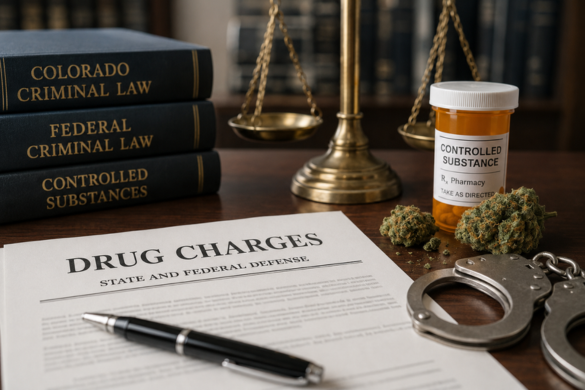
A drug charge can affect far more than the next court date.
Depending on the accusation, you may be worried about jail or prison, your job, professional licensing, housing, immigration consequences, or a felony record following you for years. If federal agents are involved, or the allegations include trafficking, manufacturing, or conspiracy, the case may feel even more intimidating.
Being charged does not mean the prosecution has proved its case.
Every drug investigation deserves a careful review of how the evidence was obtained, what substance was actually tested, how much was allegedly involved, whether the government can prove possession or intent, and whether law enforcement followed constitutional requirements.
Tisdell Law represents people facing drug charges in Evergreen, Jefferson County, Denver, throughout the Front Range, and in Colorado’s mountain communities. The firm handles both Colorado state cases and federal drug crimes.
If you are under investigation or have already been charged, call (806) 352-4844 for a free consultation.
Colorado does not treat every drug allegation the same way. The type of substance, alleged conduct, quantity, criminal history, and whether the case is filed in state or federal court can all change the exposure.
Possession cases may involve methamphetamine, cocaine, fentanyl, heroin, prescription medications, or another controlled substance.
A possession allegation does not answer several important questions: Who actually controlled the substance? Where was it found? Did the accused know it was there? Did officers lawfully search the person, vehicle, home, or container where it was recovered?
Colorado also grades possession differently depending on the substance and amount.
Current Colorado law generally treats possession of less than four grams of a Schedule I or II substance as a level 1 drug misdemeanor, subject to important substance-specific exceptions. Larger quantities and certain substances can produce felony exposure.
Distribution does not necessarily mean a large commercial operation.
Colorado’s distribution statute, C.R.S. § 18-18-405, covers knowingly manufacturing, dispensing, selling, distributing, or possessing with intent to do those things. It can also reach certain attempts, inducements, and conspiracies.
Cases may rely on text messages, controlled buys, confidential informants, cash, scales, packaging materials, surveillance, or statements that prosecutors say show an intent to sell.
For more detail, see our drug distribution defense resource.
Colorado law does not use one simple statewide “trafficking” charge in the same way people often use the term casually. Serious distribution cases are generally prosecuted under statutes such as C.R.S. § 18-18-405, with the offense level affected by the substance, conduct, and quantity involved.
For Schedule I or II substances generally, current Colorado classifications can rise from a level 3 drug felony at lower distribution quantities to level 2 or level 1 exposure as the weight increases. Methamphetamine, heroin, ketamine, fentanyl, and certain other substances have separate thresholds.
Federal trafficking charges can create a separate and potentially much more severe sentencing framework.
Manufacturing allegations can involve producing methamphetamine, processing controlled substances, cultivating unlawful quantities, or possessing chemicals and equipment prosecutors say were intended for production.
These cases often involve search warrants, forensic testing, laboratory evidence, photographs, digital communications, and technical testimony.
The presence of equipment does not automatically prove unlawful manufacturing. The prosecution still must establish the elements of the charged offense.
Prescription medications can lead to charges when prosecutors allege someone possessed them without lawful authority, used a forged or altered prescription, obtained medication through fraud, or unlawfully transferred or sold pills.
Medical records, prescription history, pharmacy data, and the exact controlled-substance schedule can become important.
Colorado legalization did not eliminate every marijuana offense.
Charges can still arise from unlawful distribution, cultivation outside legal limits, certain transfers to minors, possession beyond lawful quantities, or conduct on federal property.
Federal law remains especially important in national parks, national forests, and other federal areas. Tisdell Law’s guide to crimes on federal land explains why conduct lawful under Colorado law can still create a federal problem.
Methamphetamine cases deserve their own analysis because Colorado law uses specific quantity thresholds for distribution-related offenses, while federal law uses a separate sentencing structure.
Under current Colorado classifications for distribution, manufacture, sale, or possession with intent to distribute methamphetamine:
Those classifications come from C.R.S. § 18-18-405 and are current through the 2025 regular session.
Quantity is not the only issue. The prosecution still must prove the alleged conduct, the identity of the substance, and the defendant’s connection to it.
| Level 1 | 8 to 32 years |
| Level 2 | 4 to 8 years |
| Level 3 | 2 to 4 years |
| Level 4 | 6 months to 1 year |
Aggravated sentencing rules and alternatives can change the actual sentence. Colorado also authorizes probation, deferred dispositions, community corrections, and other alternatives in some drug cases.
A Colorado drug investigation can remain in state court or become a federal prosecution.
The difference matters.
Federal cases use federal criminal procedure, federal sentencing statutes, the U.S. Sentencing Guidelines, and prosecutors from the U.S. Attorney’s Office. Investigations may involve the DEA, FBI, Homeland Security Investigations, federal land-management agencies, or joint task forces.
Federal involvement can arise from allegations involving interstate distribution, large quantities, organized activity, federal property, federal investigative agencies, or conspiracy.
A case involving marijuana in Rocky Mountain National Park, for example, can create federal exposure even though Colorado permits recreational marijuana under state law.
Federal charging is not determined by one factor alone. The investigative agency, alleged conduct, drug type, quantity, criminal history, and prosecutorial decisions can all matter.
Federal sentencing is more complicated than matching one charge to one fixed prison term.
For many federal drug offenses, U.S.S.G. § 2D1.1 begins with a base offense level tied to the type and quantity of drugs attributed to the defendant. Other factors can then raise or lower the guideline calculation.
The defendant’s criminal history is calculated separately. The resulting offense level and criminal-history category produce an advisory guideline range, although statutory mandatory minimums or maximums can also control parts of the sentencing analysis.
For methamphetamine, federal law distinguishes between methamphetamine itself and mixtures containing methamphetamine. Under 21 U.S.C. § 841, certain cases involving at least 5 grams of methamphetamine or 50 grams of a mixture can trigger a five-year statutory minimum, while at least 50 grams of methamphetamine or 500 grams of a mixture can trigger a ten-year minimum, subject to statutory exceptions and enhancements.
Quantity can change both the charge level and the sentencing exposure.
That does not mean the weight listed in a police report should simply be accepted.
Defense counsel may need to examine what was actually weighed, whether the substance included packaging or other material, how laboratory testing was performed, who handled the evidence, and whether the quantity legally attributable to the accused matches what prosecutors claim.
Colorado’s current § 18-18-405 framework uses different thresholds depending on the drug.
For example, distribution involving a Schedule I or II substance generally reaches a level 1 drug felony above 225 grams, while methamphetamine and heroin use the lower 112-gram level-1 threshold discussed above. Level 2 and level 3 thresholds likewise differ by substance.
The amount can also be used by prosecutors as circumstantial evidence of intent to distribute, although quantity alone is not the only evidence courts may consider.
A person does not necessarily need to be accused of personally selling drugs to face a conspiracy charge.
Prosecutors may allege that several people agreed to participate in an unlawful drug operation and that each played a different role.
In federal court, 21 U.S.C. § 846 provides that a person who conspires to commit a federal Controlled Substances Act offense is subject to the same penalties prescribed for the underlying offense.
That can make conspiracy allegations particularly serious when the alleged objective involves quantities carrying mandatory minimum sentences.
A conspiracy case may depend heavily on messages, recorded calls, informants, financial records, surveillance, and testimony from cooperating witnesses.
Defense questions can include whether an actual agreement existed, whether the accused knowingly joined it, and whether the government’s interpretation of ordinary associations or communications proves criminal participation.
Colorado classifies controlled substances into Schedules I through V.
The schedule can affect how an offense is charged, but it is not the only factor. Quantity, alleged intent, transfer to another person, and the particular substance can create separate classifications or exceptions.
Schedule I and II substances generally receive greater scrutiny in Colorado’s distribution statute, while Schedule III, IV, and V drugs can be treated differently at comparable quantities.
This is another reason a charge should be evaluated using the exact statutory subsection rather than a generic label such as “drug possession.”
Colorado separates drug felonies from ordinary felony classifications.
A relatively low-level possession allegation may be charged as a drug misdemeanor, while distribution, manufacture, possession with intent, higher quantities, or specific controlled substances can produce felony charges.
The difference can affect incarceration exposure, fines, supervision, and the long-term effect of a conviction.
Current presumptive drug-felony ranges run from six months to one year for a level 4 drug felony up to eight to 32 years for a level 1 drug felony. The statute also provides separate aggravated ranges for some classifications and mandatory parole terms.
The final outcome depends on much more than the label of the charge.
There is no universal drug-case defense. The right strategy depends on how the investigation developed and what the government can actually prove.
Many drug cases begin with a traffic stop, warrant, home search, vehicle search, or encounter with law enforcement.
Defense counsel may examine whether officers had legal grounds for the initial detention, whether a warrant was supported by probable cause, whether consent was voluntary, and whether officers exceeded the lawful scope of a search.
Evidence obtained in violation of constitutional protections may be subject to suppression.
Finding drugs near someone does not necessarily prove that person knowingly possessed them.
Cases involving shared vehicles, homes, hotel rooms, bags, or containers may raise disputes over who actually knew about and controlled the substance.
The substance recovered by police must be handled, stored, tested, and documented properly.
A defense investigation may examine whether evidence was mislabeled, contaminated, lost, improperly stored, or subjected to unreliable testing.
Tisdell Law’s Colorado drug-defense practice extends beyond Evergreen.
The firm represents people facing drug charges in Jefferson County, Denver, the Front Range, and mountain communities where serious state or federal allegations can arise.
People facing charges in Highlands Ranch, Centennial, Littleton, Loveland, Denver, and surrounding communities may be dealing with local police, county agencies, state investigators, or federal task forces.
The defense strategy should reflect the court, agency, and statute actually involved.
Drug cases in Colorado’s mountain communities can involve state highways, tourism, federal lands, interstate travel, and overlapping state and federal jurisdiction.
Tisdell Law represents clients in these communities as well as in Evergreen and the Denver metro area.
Tisdell Law has defended marijuana and drug-related cases since 2009 and represents clients in both state and federal courts.
Attorney Adam Tisdell’s practice focuses on marijuana defense and federal drug crimes, and the firm states that he has been recognized by Super Lawyers for Cannabis Law for five consecutive years.
The firm’s existing strengths are worth preserving:
If your criminal matter also involves impaired driving, see our resource on DUI defense in Colorado.
A free consultation is not a commitment to a particular strategy.
The first conversation is an opportunity to explain what happened, what you have been charged with, whether you have upcoming court dates, and whether investigators have already searched property or seized evidence.
The firm can then identify the immediate issues that need attention and explain what the next stages may look like.
You do not have to decide the entire case during that first call.
A drug arrest or federal investigation can feel overwhelming, but the charge is the beginning of the legal process, not the final outcome.
The evidence can be tested. Searches can be reviewed. Laboratory procedures, witness accounts, digital evidence, and the government’s theory can all be challenged where the facts support it.
If you are facing drug possession, distribution, trafficking, manufacturing, marijuana, methamphetamine, prescription-drug, conspiracy, or federal charges in Evergreen or elsewhere in Colorado, Tisdell Law can review your situation.
Call (806) 352-4844 or contact us for a free consultation.
Sometimes, but not always.
Colorado classifies many lower-quantity possession offenses as drug misdemeanors, while larger quantities and certain substances can result in felony charges. The exact classification depends on the substance, amount, and statutory subsection.
Yes.
Federal involvement may arise from interstate activity, larger investigations, conspiracy allegations, federal land, federal agencies, or other jurisdictional factors. The fact that conduct occurred in Colorado does not guarantee that it will remain a state case.
It can be extremely important, but it is not the only factor.
Quantity can change the felony level under Colorado law and the base offense level or statutory penalty in federal court. Prosecutors must still prove the underlying conduct and connect the accused to the drugs.
The answer depends on the facts and the legal basis for the search.
Possible issues include consent, probable cause, a warrant, the circumstances of the traffic stop, and other recognized exceptions to the warrant requirement. A defense lawyer can review how the search occurred rather than assuming it was lawful.
You have constitutional rights, including the right to remain silent and the right to consult an attorney.
You do not need to explain the case or try to persuade investigators on your own. Politely exercising your rights and contacting counsel is different from obstructing an investigation.