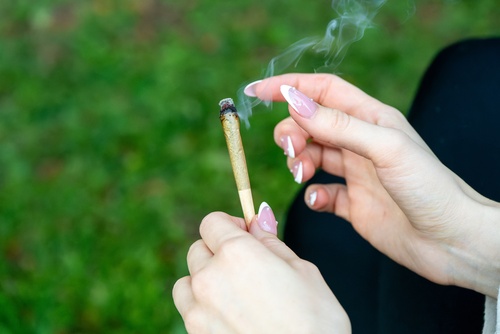

Colorado legalized adult-use marijuana years ago, but that does not mean marijuana is legal everywhere in the state.
Where you are matters. So does the difference between possessing marijuana and using it.
An adult who can lawfully possess marijuana at home may still violate the law by consuming it openly in a public park. Marijuana that is lawful under Colorado law can become a federal problem when carried into a national park. Denver International Airport goes even further by prohibiting marijuana across all airport property.
The result is a patchwork of state law, federal law, local rules, and private-property policies that can surprise residents and visitors alike.
At Tisdell Law Firm, our team handles Colorado drug crime defense in both state and federal matters. If you are facing a marijuana-related allegation, we can help you understand which law applied where the encounter happened.
For adults age 21 and older, Colorado law generally permits possession of up to two ounces of marijuana.
That does not create a right to smoke, vape, eat, or otherwise consume marijuana anywhere you choose.
Colorado prohibits open and public consumption. Places generally accessible to the public—such as streets, sidewalks, parks, transportation facilities, playgrounds, and common areas of public buildings—can fall within that restriction.
Private-property rules add another layer. A landlord, hotel, employer, hospital, or business may prohibit marijuana even when state criminal law would otherwise allow possession.
So the right question is often not simply, “Is marijuana legal in Colorado?”
It is: Is possession legal here, is consumption legal here, and does this particular property have additional rules?
For most adults 21 and older, a private residence is the clearest example of a place where Colorado marijuana laws generally allow lawful possession and nonpublic consumption within applicable limits.
But ownership matters.
A landlord can restrict marijuana use on rental property. Apartment leases may prohibit smoking or marijuana entirely. Vacation rentals can impose similar rules.
Even on private property, marijuana use should not become open and public merely because it takes place near a home. A front yard, balcony, or other area visible or accessible to the public can raise different questions than use inside a private residence.
Property owners also remain free to prohibit marijuana on their premises.
Colorado state parks are not the same as federal national parks, but that does not make public marijuana use lawful.
Colorado’s prohibition on open and public marijuana consumption applies to parks. That means visitors should not assume they can smoke, vape, or consume marijuana at a campsite, picnic area, trail, beach, or other public portion of a state park simply because Colorado legalized cannabis.
Possession can be more nuanced.
There is not one simple rule making all lawful adult possession illegal merely because someone enters every Colorado state park. However, Colorado Parks and Wildlife can impose location-specific rules, and some facilities or designated areas have additional restrictions. Individual parks may also impose smoking restrictions because of fire danger.
Before bringing marijuana into a particular recreation area, check the rules governing that specific property.
The rules change substantially once you enter federal land.
Colorado’s legalization laws do not override federal controlled-substance law. Marijuana possession can therefore create a federal problem in places such as Rocky Mountain National Park, Great Sand Dunes National Park, Mesa Verde National Park, and federally managed national forests.
Our firm discusses this issue in more detail in our guide to Colorado marijuana and federal law and our page about federal drug charges in Colorado national parks.
This distinction catches people off guard because the marijuana may have been purchased legally only a few miles away.
For example, someone can legally buy marijuana from a licensed Colorado dispensary and then potentially face a federal allegation after carrying that same product into Rocky Mountain National Park.
No.
Denver International Airport has its own unusually broad rule prohibiting marijuana on airport property.
DEN’s rules prohibit possessing, consuming, using, displaying, transferring, distributing, selling, transporting, or growing marijuana on property owned by the airport. That includes more than the terminal or TSA checkpoint. Airport property can include parking areas, roadways, transportation facilities, hotels, offices, and other airport-owned areas.
This is an important distinction because travelers sometimes assume marijuana is fine until they reach the federal TSA screening area.
At DEN, the prohibition starts earlier than that.
Our team discusses these issues in more detail in our guide to marijuana and TSA at Denver International Airport.
Other Colorado airports may have their own local property rules, so travelers should not assume DEN’s exact policy applies identically everywhere.
Taking marijuana onto an aircraft or across state lines can also raise separate federal-law concerns regardless of Colorado law.
Hospitals require more nuance than a simple yes or no.
A hospital or healthcare facility generally has authority to control what patients and visitors may possess or use on its property. Recreational marijuana is not automatically allowed merely because the facility is located in Colorado.
Colorado law changed in 2026 for certain terminally ill medical-marijuana patients.
The new law creates a framework allowing qualifying terminally ill patients who are registered in Colorado’s medical marijuana program to use certain medical marijuana products in participating healthcare facilities, subject to facility policies and restrictions.
That does not create a general right for visitors or other patients to bring or use recreational marijuana inside a hospital. Facilities can impose detailed rules governing storage, administration, safety, and the types of products allowed. Smoking and vaping are not part of the new protected framework.
If marijuana is discovered in a hospital, nursing facility, or similar setting, the facility’s own policy and the person’s medical status can be just as important as general Colorado marijuana law.
Schools are another area where ordinary adult-use rules do not translate neatly.
Recreational marijuana should not be treated as permissible simply because the person possessing it is over 21. School property, buses, and school-sponsored activities are heavily regulated environments.
Colorado does have specific protections involving certain students who use nonsmokable medical marijuana.
Under state law, qualifying medical marijuana may be stored and administered under an approved plan involving the school, parents, and healthcare instructions. Students generally are not simply free to possess and self-administer marijuana on campus outside those procedures.
For employees, parents, and visitors, school policies and other criminal laws can create additional issues.
Yes, and they often do. Colorado legalization does not require private employers to permit marijuana use or possession in the workplace.
An employer may maintain drug-free workplace policies and may prohibit employees from possessing or consuming marijuana on company property. That can apply even when the employee’s off-duty possession would otherwise be lawful under state marijuana laws.
Employment consequences and criminal consequences are separate questions. Conduct may violate an employer’s policy without necessarily creating a criminal charge, while other conduct can create both.
Staying in a hotel or vacation rental does not turn the room into unrestricted private property for marijuana purposes. The owner or operator may still prohibit possession, smoking, vaping, or all marijuana use.
Many hotels prohibit all smoking regardless of the substance involved. A vacation-rental agreement may contain similar restrictions.
Violating those rules can lead to removal from the property or other consequences even when the underlying amount of marijuana would otherwise be legal to possess under Colorado law.
Never assume that “private room” means “marijuana permitted.”
Colorado’s public-use restrictions generally make ordinary restaurants, bars, concert venues, sidewalks, parks, and similar public places inappropriate locations for marijuana consumption.
There is an important exception: Colorado permits licensed marijuana hospitality businesses and certain locally authorized consumption environments.
Those businesses operate under specific licensing requirements. Their existence does not mean any restaurant, bar, or private club can simply decide to allow cannabis use.
Local law matters as well. Cities and counties have authority to regulate whether these businesses are allowed.
A vehicle creates several separate issues.
Lawful possession of a permitted amount is not the same as lawful consumption.
Colorado prohibits marijuana use in a motor vehicle and regulates open marijuana containers. Driving while impaired by marijuana can also result in DUI or DWAI allegations.
That means consuming marijuana while driving—or while sitting in a vehicle on a public roadway—is very different from transporting lawfully possessed marijuana.
Location still matters too.
A person who drives with marijuana onto federal land or onto Denver International Airport property may enter an area where possession itself becomes prohibited.
Colorado legalization stops at Colorado’s border.
Taking marijuana into another state implicates that state’s laws and can also raise federal issues involving interstate transportation.
The same principle can apply even when marijuana is legal in both the departure state and destination state. State legalization does not create permission under federal law to transport marijuana across state lines.
If an allegation involves interstate activity or federal jurisdiction, our team can evaluate whether the matter is governed primarily by Colorado law, federal law, or both.
Colorado medical marijuana protections can provide rights that recreational users do not have, but a registry card is not a universal permission slip.
It generally does not override federal law on national park property. It does not automatically defeat an airport restriction. It does not necessarily override a landlord’s lease or an employer’s workplace policy.
Hospitals now have a special 2026 framework for some terminally ill medical-marijuana patients, but that exception is limited and facility-specific.
The exact setting matters.
The place where marijuana was found can affect both the charge and the available defenses.
When our firm reviews a marijuana case, we may examine questions such as:
Being near marijuana is not necessarily the same as legally possessing it, particularly in a shared car, hotel room, campsite, bag, or residence.
Our criminal defense services include marijuana, controlled-substance, and federal drug matters.
Colorado has some of the country’s most permissive marijuana laws, but location can turn conduct that is lawful in one place into a state, local, or federal legal problem somewhere else.
Private homes, public parks, state parks, national parks, airports, hospitals, schools, workplaces, hotels, and vehicles are not governed by one uniform rule.
If you were cited, arrested, or contacted by law enforcement about marijuana possession or use, our team can review where the encounter happened, which laws applied, how the evidence was obtained, and what options may be available.
You can view our Tisdell Law locations or contact our team to discuss your situation.
Call (806) 352-4844 for a consultation.
Generally, marijuana consumption is permitted on private property when the owner allows it and the use is not open and public.
Some licensed marijuana hospitality establishments also permit consumption under state and local rules.
Generally, no. Colorado prohibits open and public marijuana consumption, and parks fall within the types of public places covered by that rule.
A particular state park may also have additional smoking, fire, or property-specific restrictions.
In some circumstances.
Effective in 2026, Colorado law permits certain healthcare facilities to allow qualifying terminally ill patients registered in the state’s medical marijuana program to use medical marijuana under facility rules and statutory restrictions.
That is not a general exception for recreational marijuana.
Lawful adults may generally transport marijuana they can legally possess, but marijuana may not be consumed in the vehicle, open-container rules can apply, and driving while impaired is prohibited.
The destination matters too. Driving onto federal land or DEN property can change whether possession is lawful.